

If you’re researching the Miniature Bull Terrier, you’ll quickly come across conversations about health testing and hereditary disease.
It can feel overwhelming — especially when you’re just looking for the right puppy to join your family.
The truth is, every dog breed has inherited conditions that can appear from time to time. What matters most isn’t pretending they don’t exist — it’s understanding them, testing for what we can, and making careful, responsible breeding decisions.
Talking openly about hereditary disease isn’t negative. It’s part of loving and protecting the breed.
Below is a simple, easy-to-understand guide to the main hereditary conditions seen in Miniature Bull Terriers — what they are, how they’re tested for, and how they can be passed on.
Polycystic Kidney Disease (PKD)
What it is: PKD is a condition where small fluid-filled cysts grow inside the kidneys. Over time, these cysts can affect how well the kidneys work. In severe cases, it can lead to kidney failure.
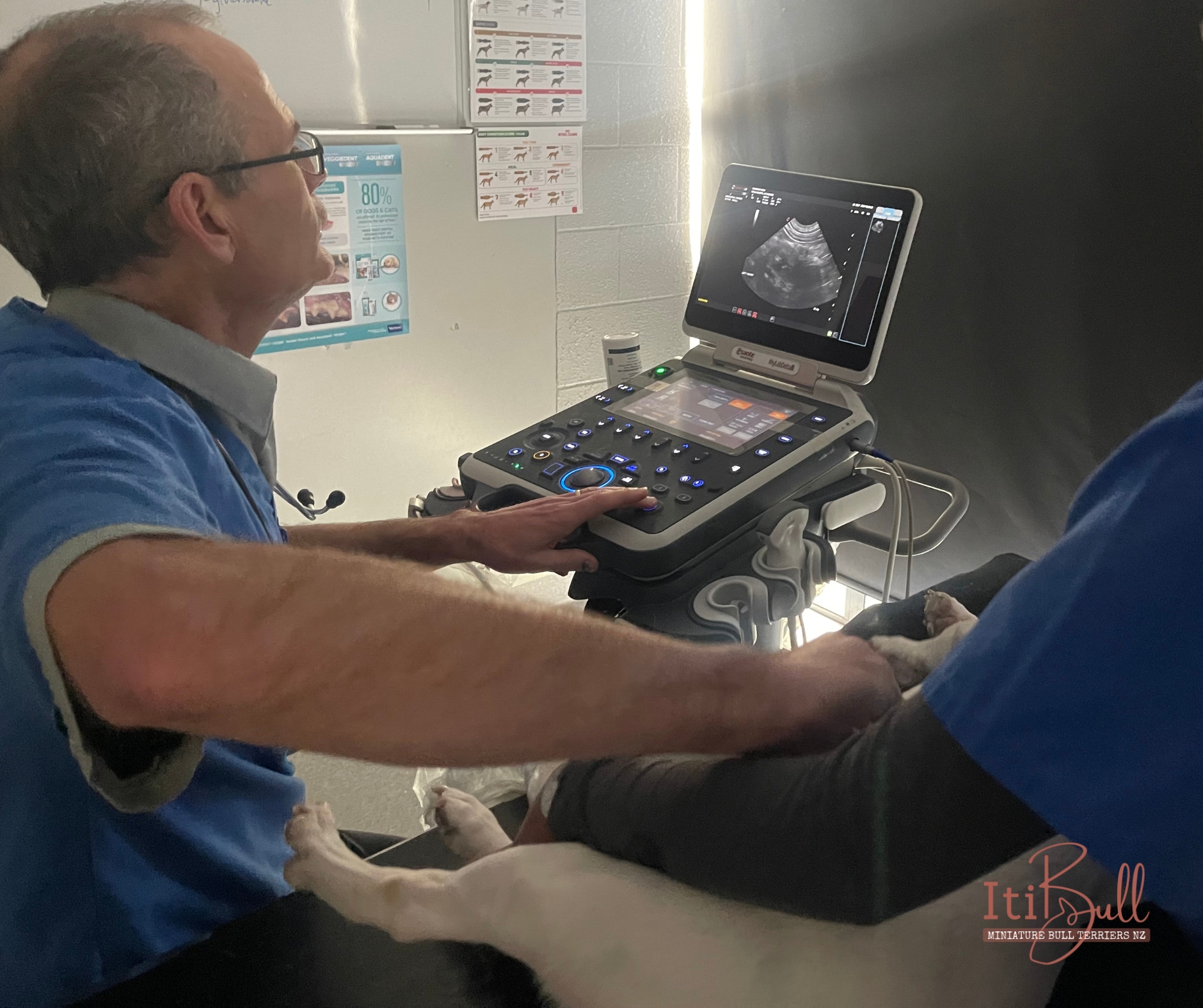
How it is tested: PKD is detected by ultrasound scanning of the kidneys, usually performed by a veterinarian experienced in screening.
How it is inherited: PKD is inherited. If a dog is affected, it can pass the condition on to its puppies. Responsible breeders avoid breeding affected dogs. Because this condition can be screened for, its occurrence has reduced significantly in well-managed breeding programmes.
Heart Disease
Mitral Valve Dysplasia (MVD)
What it is: A congenital condition where one of the heart valves does not form properly. This can cause blood to leak backwards in the heart.
How it is tested: A veterinarian may hear a heart murmur using a stethoscope during a routine check.
However, the most accurate way to assess the heart is with an echocardiogram (heart ultrasound) performed by a specialist cardiologist. This allows the structure and function of the heart to be properly evaluated.
How it is inherited: It is believed to have a genetic component, though inheritance can be complex. Dogs with confirmed disease should not be bred from.
Subaortic Stenosis (SAS)
What it is: A narrowing below the aortic valve that restricts blood flow from the heart to the body.
How it is tested: Some dogs may have a murmur that can be heard with a stethoscope. An echocardiogram performed by a specialist cardiologist is the most reliable way to diagnose and grade the severity of SAS.
How it is inherited: SAS is considered hereditary, although the exact inheritance pattern is not fully understood. Responsible breeders screen breeding dogs and avoid breeding affected animals.
Luxating Patella (Dislocating Kneecaps)
What it is: This is when the kneecap slips out of place. It can range from mild (occasional slipping) to severe (constant dislocation requiring surgery).
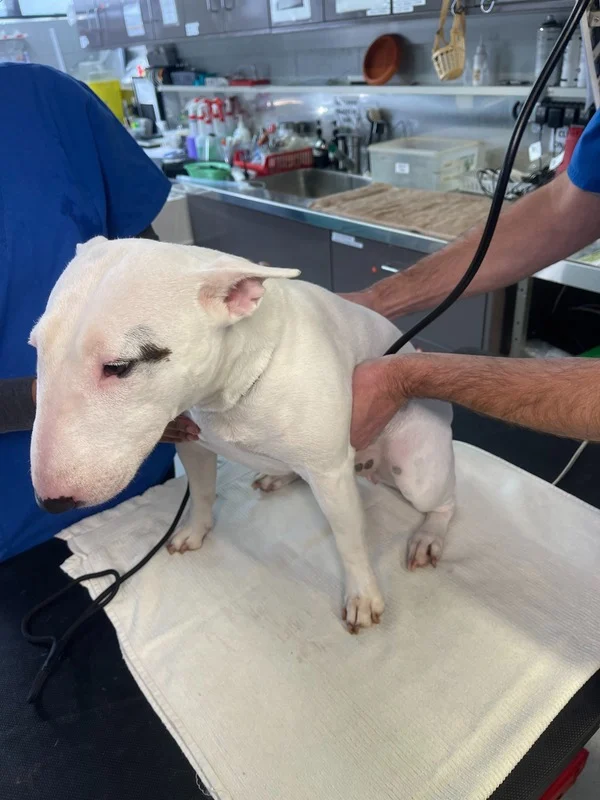
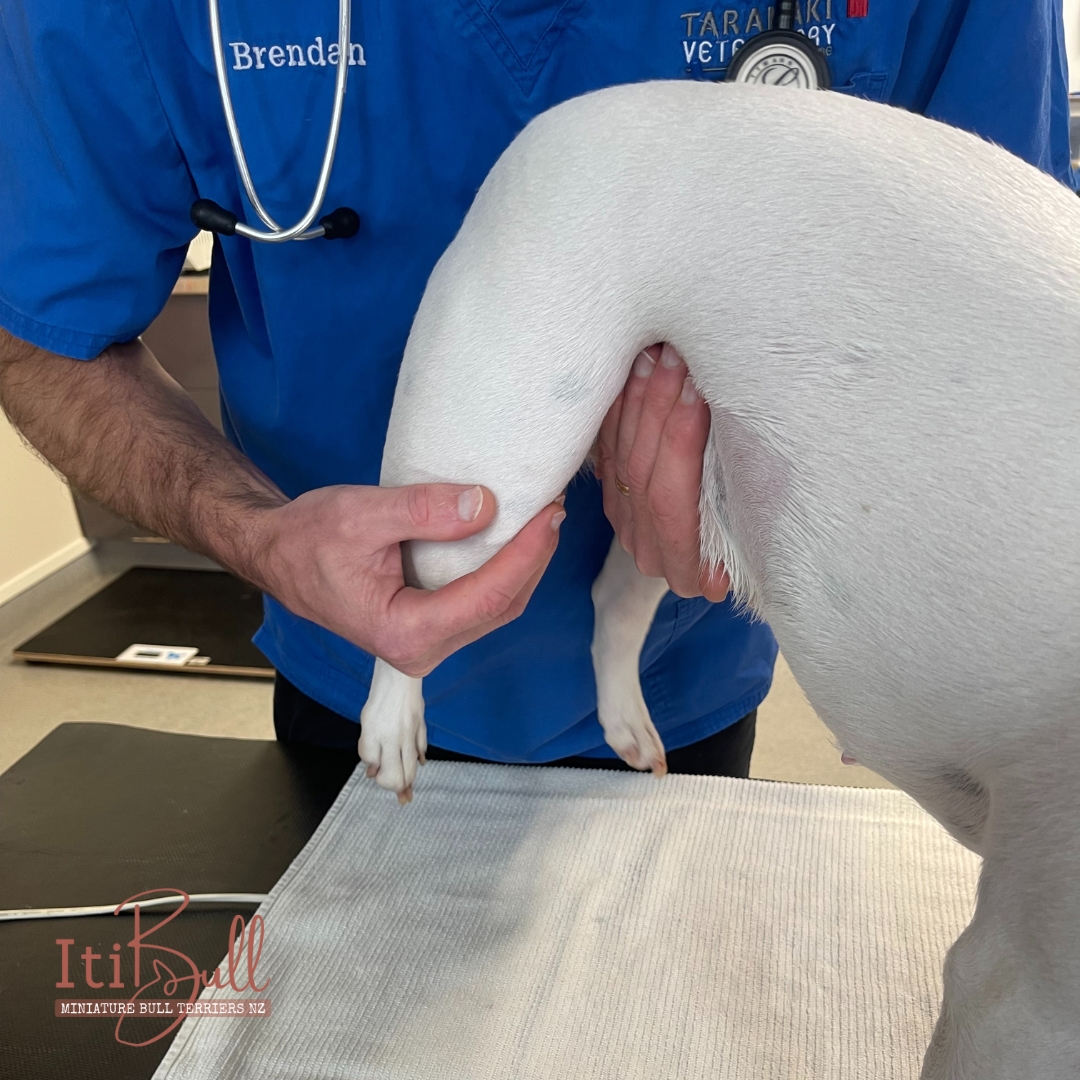
How it is tested: A physical examination by a veterinarian, who grades the severity from mild to severe.
How it is inherited: There is a hereditary component. It is influenced by genetics and sometimes structure. Dogs with higher grades should not be bred from.
Deafness (BAEP Tested)
What it is: Some Miniature Bull Terriers can be born deaf in one or both ears. This is more commonly seen in predominantly white dogs, but can occur in coloured dogs as well.
How it is tested: Deafness can be confirmed using a BAEP (Brainstem Auditory Evoked Response) test. This painless test measures electrical activity in the brain in response to sound and confirms whether a dog can hear in one or both ears.
How it is inherited: Deafness has a genetic link, particularly associated with pigmentation genes. Because the inheritance pattern is complex, breeders use BAEP testing and careful pairing decisions to reduce risk.
Lethal Acrodermatitis (LAD)
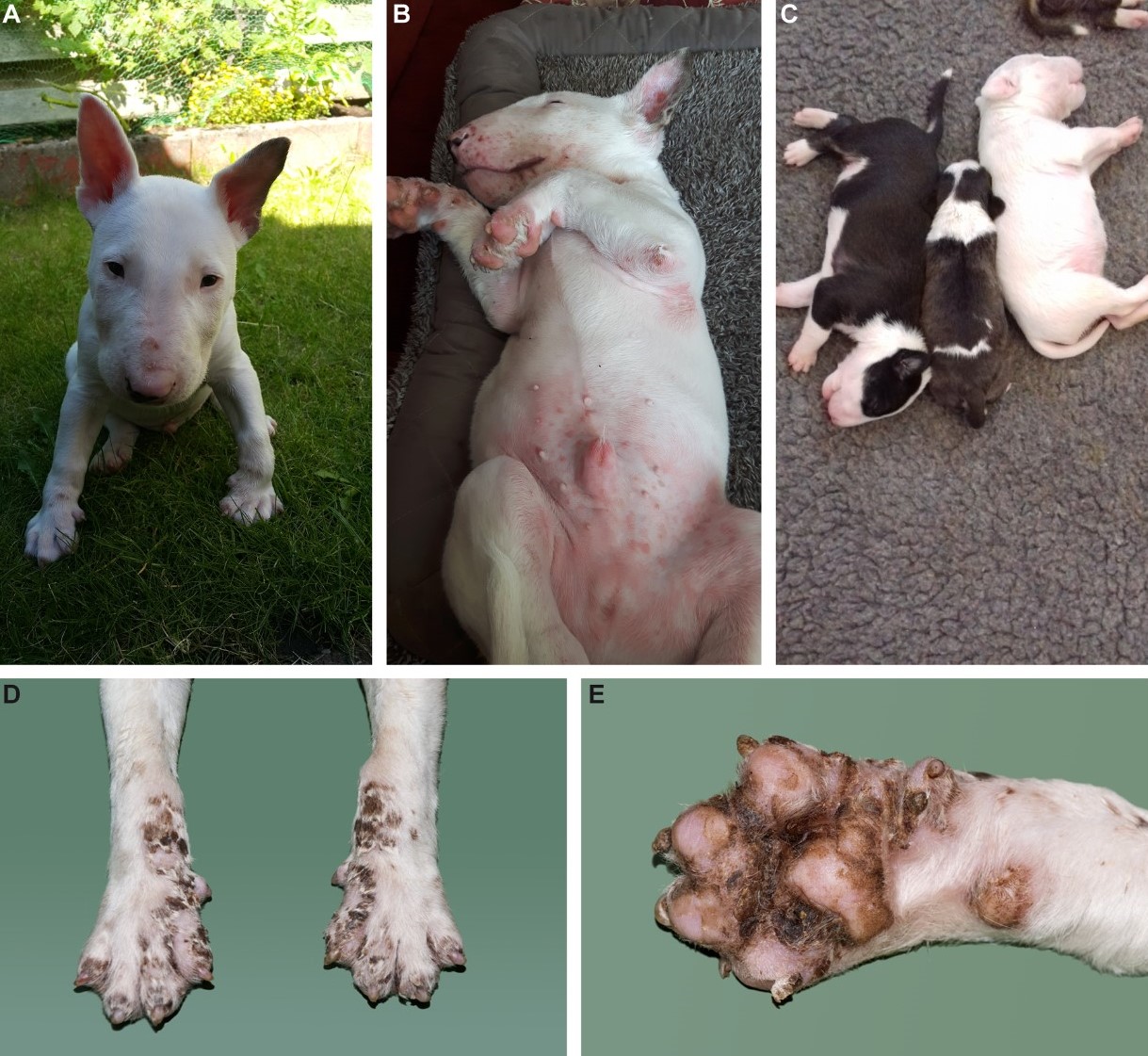
What it is: LAD is a serious inherited disease affecting the immune system and skin. Puppies with LAD often fail to thrive, have skin issues, and typically have a shortened lifespan.
How it is tested: There is a DNA test available.
How it is inherited: LAD is inherited in a recessive pattern:
A carrier dog looks completely healthy.
If two carriers are bred together:
25% of puppies may be affected
50% may be carriers
25% may be clear
Responsible breeders DNA test and avoid mating two carriers together.
Primary Lens Luxation (PLL)
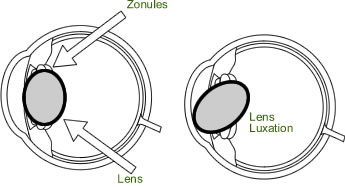
What it is: PLL is an eye condition where the lens of the eye moves out of its normal position. This can cause pain and may lead to blindness if untreated.
How it is tested: There is a DNA test available, and eye examinations by a veterinary ophthalmologist can also assess eye health.
How it is inherited: PLL is inherited in a recessive pattern, similar to LAD:
Clear × Clear = all clear puppies
Clear × Carrier = no affected puppies (some carriers possible)
Carrier × Carrier = risk of affected puppies
DNA testing allows breeders to avoid producing affected puppies.
Laryngeal Paralysis
What it is: A condition where the larynx (voice box) does not open and close properly. This can cause noisy breathing, exercise intolerance, or distress in severe cases.
How it is tested: There is a DNA test available, and confirmed diagnosis is usually made by a veterinarian through examination of the airway, often under light sedation.
How it is inherited: The inheritance pattern in Miniature Bull Terriers is not fully defined. It is believed to have a hereditary component, and responsible breeders monitor bloodlines carefully.

Urinary Protein Creatinine Ratio (UPC)
What it is: The Urinary Protein Creatinine Ratio (UPC) is not a disease itself — it is a screening test used to check for abnormal levels of protein in a dog’s urine.
Healthy kidneys keep protein in the bloodstream. If protein is leaking into the urine, it can be an early sign that the kidneys are not functioning as they should.
In Miniature Bull Terriers, monitoring kidney health is important due to historical kidney concerns within the breed.
How it is tested: A simple urine sample is collected and sent to a laboratory, where the ratio of protein to creatinine is measured.
It is a non-invasive test and can be repeated over time to monitor kidney health.
How it is inherited: A high UPC result itself is not inherited. However, persistently elevated protein levels can sometimes be linked to underlying hereditary kidney disease.
Screening helps identify potential concerns early and supports responsible breeding decisions.

Why This Matters
Health testing does not mean a breed is unhealthy. It means breeders are taking responsibility.
Through DNA testing, cardiac screening, BAEP testing (where applicable), structural assessments and thoughtful pedigree research, we reduce risk, protect puppies, and strengthen the future of the breed.
A Note on the Information Above
The information provided in this article is intended as general guidance only. It is written in simple language to help puppy buyers and owners better understand hereditary conditions that may be seen in the Miniature Bull Terrier.
It is not intended to replace veterinary advice, specialist diagnosis, or formal health testing protocols.
Health research, testing recommendations, and scientific understanding continue to evolve. For detailed, up-to-date information, we encourage readers to consult:
A qualified veterinarian
A specialist veterinary cardiologist or ophthalmologist where appropriate
Recognised breed clubs and canine health authorities
At ItiBull, we are committed to ongoing education, responsible breeding, and making informed decisions based on current veterinary guidance and specalist research.